


Vacuum Casting and Silicone Tooling
Using Vacuum Casting and Silicone Tooling, we produce 20-50 high-quality pilot parts simulating ABS, PP, or rubber properties without the need for steel molds.
Upload your CAD files and receive a custom quote within 2 hours.
Your uploads are confidential and secure.
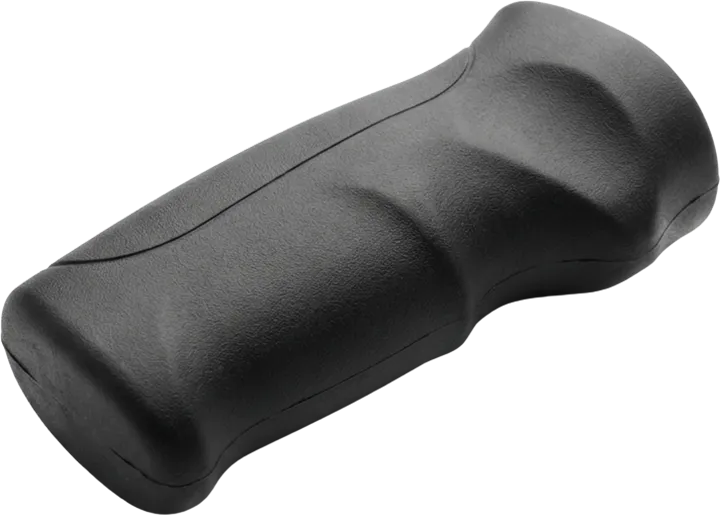
What is Vacuum Casting?
Vacuum Casting is a process where liquid silicone is poured around a flawless “Master Model” (produced via SLA technology) to create a mold, into which polyurethane resin is then injected under vacuum.
At ProtoDep, utilizing High Strength RTV2 Silicone molds with high tear resistance, we produce parts at up to 90% lower costs compared to injection molding. It is the ideal technology for functional testing, field demos, and bridge tooling during R&D phases. With our extensive library of materials that mimic the properties of thermoplastics (ABS, PP, PC), we deliver parts indistinguishable from the final product.
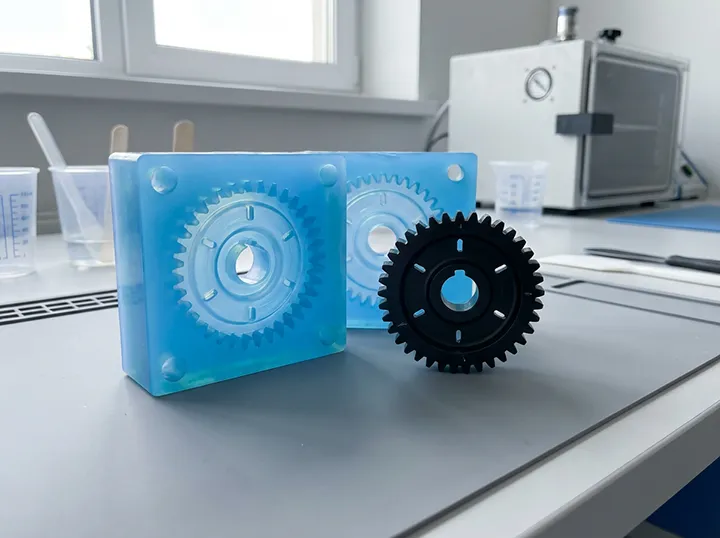
Vacuum Casting Advantages
Low Tooling Cost: Since silicone is used instead of steel, tooling costs are minimal and molds are ready in days.
Wide Material Range: Clear, flexible (rubber), rigid, high-temp, and fire-retardant (UL94) polyurethanes available.
Excellent Surface Finish: Replicates the master model’s texture (gloss, matte, or leather grain) down to the micron.
Overmolding: Rubber coating on metal parts or soft-touch features on rigid plastics can be applied.
Vacuum Casting Limitations
Mold Life: A single silicone mold yields an average of 20-25 parts. New molds are needed for higher volumes (100+).
Tolerance Sensitivity: Since silicone is flexible, tolerances are slightly wider than CNC machining (±0.15% – ±0.2%).
Cycle Time: Slower than 3D printing due to resin curing times (approx. 4-6 parts per day per mold).
Thin Walls: Very thin (under 0.8mm) and large surface areas may face filling challenges, though air bubbles are eliminated.
Vacuum Casting Production Specifications
Metric Dimensions
Maximum Build Volume
380 x 284 x 380 mm
Standard Tolerance
±0.2 mm
Layer Thickness
80 mikron
Min. Wall Thickness
0.8 mm
Casting Material Options
Choose PU Casting Resin (ABS-like) for rigidity, Flexible Casting Resin (PP-like) for impact resistance, or Optical Clear Casting Resin for glass-like transparency tailored to your project.
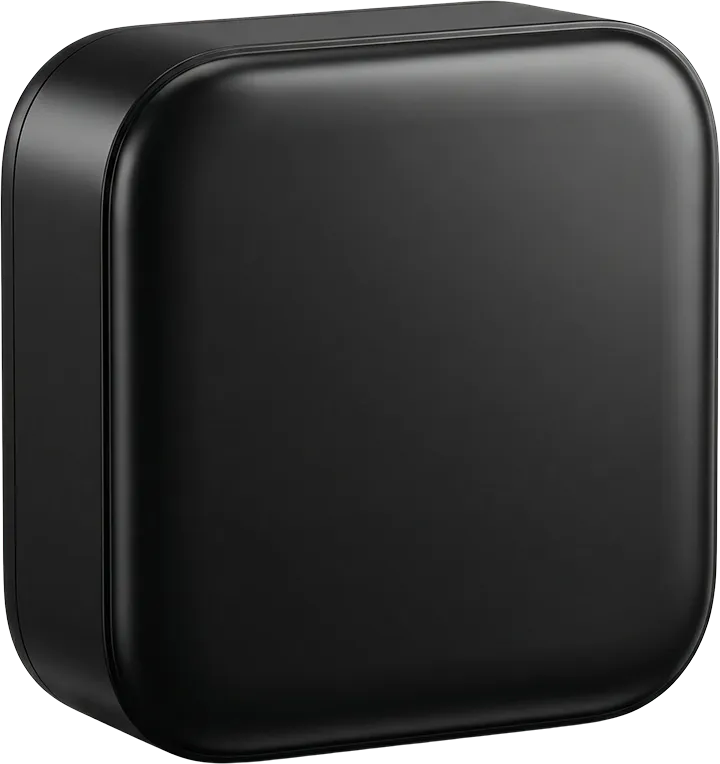
PU Casting Resin (ABS-Like)
Rigid polyurethane casting resin with ABS mechanical properties, optimized for vacuum casting technology.
About PU Casting Resin (ABS-Like)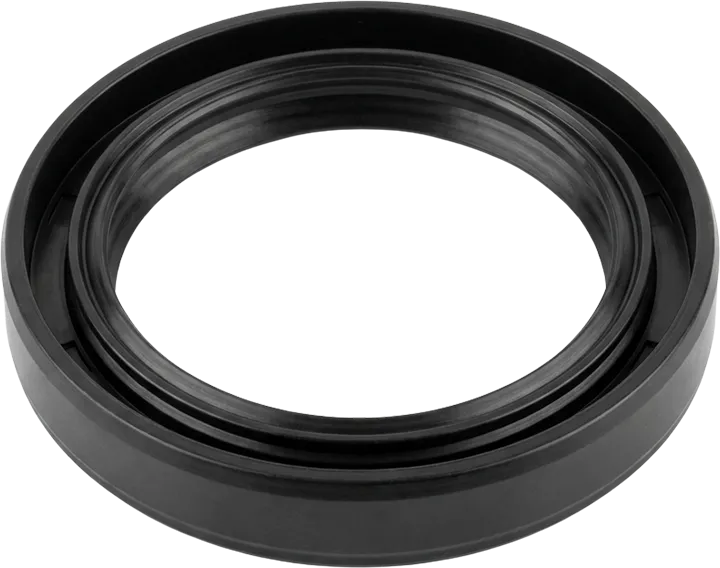
Flexible Casting Resin (PP-Like)
Semi-flexible casting resin mimicking Polypropylene (PP), offering a balance of impact resistance and flexibility.
About Flexible Casting Resin (PP-Like)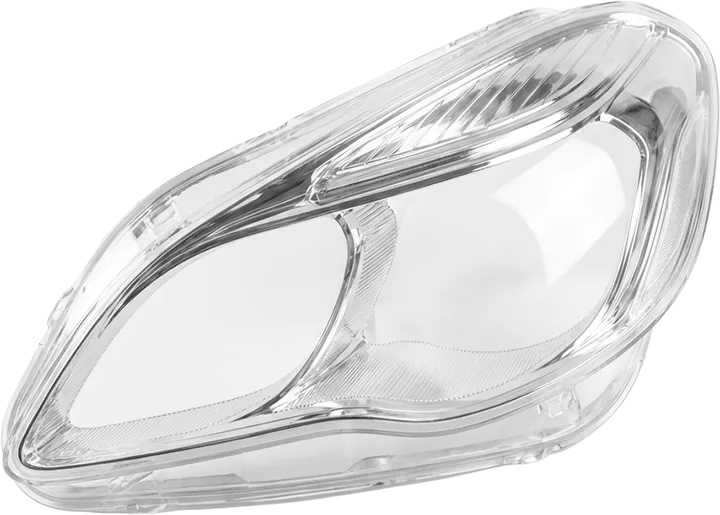
Optical Clear Casting Resin
Transparent polyurethane casting resin offering optical clarity and smooth surface finishes for lighting and lenses.
About Optical Clear Casting Resin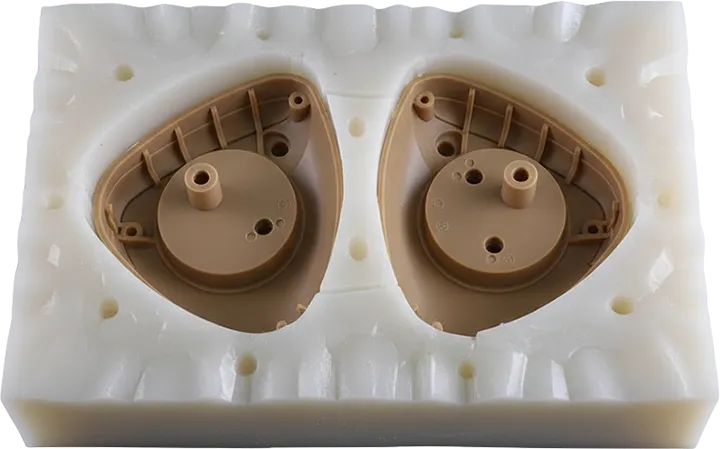
RTV2 Molding Silicone (General Purpose)
Professional molding silicone with high detail reproduction and low shrinkage for precision prototyping.
About RTV2 Molding Silicone (General Purpose)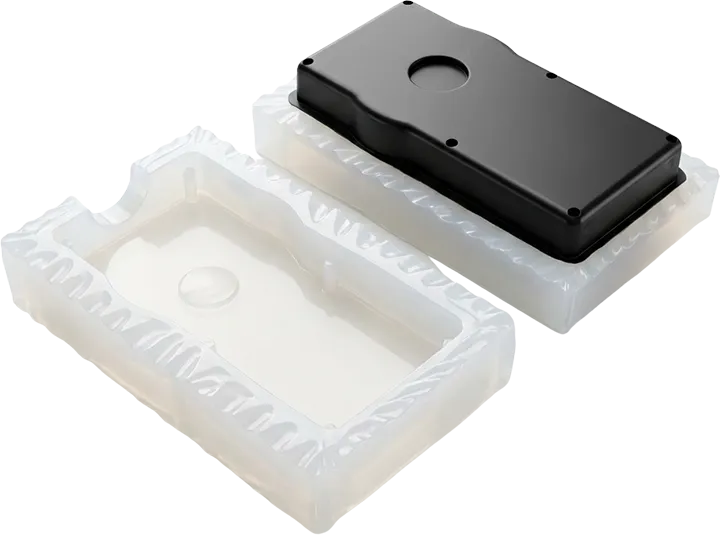
High Strength RTV2 Silicone
Long-lasting molding silicone with high tear strength and chemical stability, ideal for serial production casting.
About High Strength RTV2 Silicone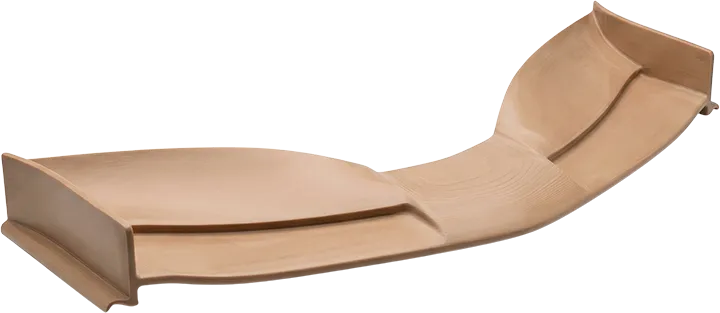
CNC Modelling Block (Lightweight)
Low-density, easily machinable, and dimensionally stable economical master modelling block for CNC.
About CNC Modelling Block (Lightweight)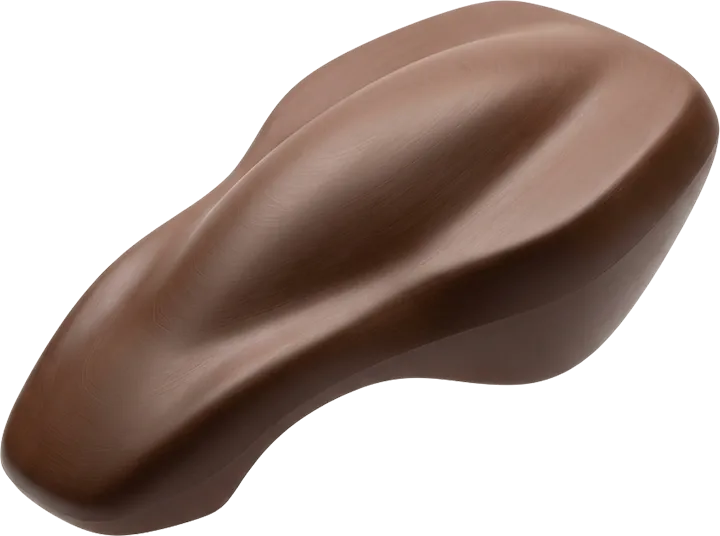
CNC Modelling Block (Standard)
Standard density machining block offering excellent surface finish for industrial design and prototyping.
About CNC Modelling Block (Standard)Industries Using Vacuum Casting

Consumer Electronics
Production of overmolded keypads, transparent display screens, and aesthetic housings for end-user testing before market launch.
Explore Industry
Automotive and Mobility
Functional prototypes for interior trim, buttons, and air vents produced using Flame Retardant Resin.
Explore Industry
Medical and Healthcare Technologies
Pilot production runs of 20-50 units for handheld devices and housings, offering chemical resistance and end-use quality painting.
Explore IndustryVacuum Casting FAQ
For what production volumes is vacuum casting (silicone molding) the most cost-effective?
Vacuum casting is generally the most cost-effective manufacturing method for low-volume production runs between 10 and 50 units. Within this range, it provides up to 90% cost savings compared to traditional steel injection tooling, making it ideal for bridge production and high-quality functional prototypes.
What is a master model (pattern) in the vacuum casting process?
A master model is the initial flawless part used to create the silicone mold. In professional vacuum casting services, these patterns are typically manufactured using high-precision SLA 3D printing and then hand-finished to achieve the exact surface texture and dimensional accuracy required for the final production batch.
What custom color and surface finish options are available for vacuum casting?
Vacuum casting offers extensive aesthetic flexibility. Polyurethane resins can be ‘through-colored’ using specific pigments during the casting process to match your requirements. Additionally, parts can be professionally painted or textured to match any specific RAL or Pantone code for a retail-ready, mass-production appearance.
Can vacuum cast polyurethane parts be used for functional end-use applications?
Yes, vacuum cast parts are fully suitable for functional end-use. The advanced polyurethane (PU) resins used in the process are engineered to replicate the mechanical properties of industrial thermoplastics, including high impact resistance, thermal stability, and UV resistance, meeting the standards for medical, automotive, and aerospace components.
Is insert molding possible with the vacuum casting and silicone molding process?
Absolutely. Vacuum casting is highly compatible with insert molding. Metal components such as brass threaded inserts, steel shafts, or electronic sensors can be precisely placed into the silicone mold before the resin is poured, resulting in a high-strength, encapsulated assembly ready for functional testing or end-use.
How long can molds be stored?
Silicone molds can shrink over time due to humidity. Therefore, completing the casting process within 1-2 weeks of mold production yields the best results.
Can rubber-like soft parts be cast?
Yes. We can produce gaskets and covers with flexible polyurethanes ranging from 30 Shore A (eraser soft) to 90 Shore A (tire hard).
Quote in Seconds, Parts in Days
Upload your 3D CAD files, select your manufacturing technology, and receive an instant cost analysis. Zero wait time, no minimum order requirements.