


Functional Prototyping and Testing
We validate your designs under real-world conditions with Functional Test Prototyping, producing durable parts to test thermal resistance, impact strength, and assembly fit.
Upload your CAD files and receive a custom quote within 2 hours.
Your uploads are confidential and secure.
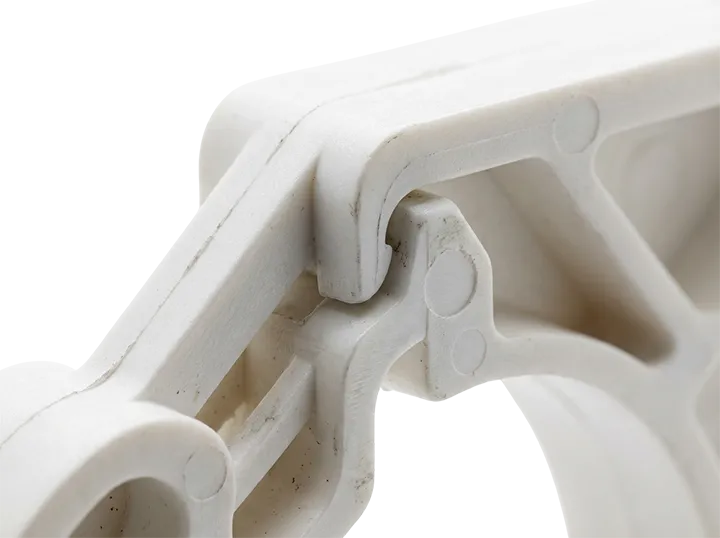
What is a Functional Prototype?
Functional Test Prototypes are models produced not just for visual form, but to verify mechanical strength, thermal resistance, and operational performance, possessing properties closest to the final end-use product.
At ProtoDep, utilizing SLS 3D Printing Service and Industrial FDM technologies, we produce “Works-like” versions of your product. Whether it’s an intake manifold next to a car engine or a clip that snaps open and closed repeatedly, we secure your design before tooling investment by selecting the right material (e.g., Carbon Fiber Reinforced Nylon).
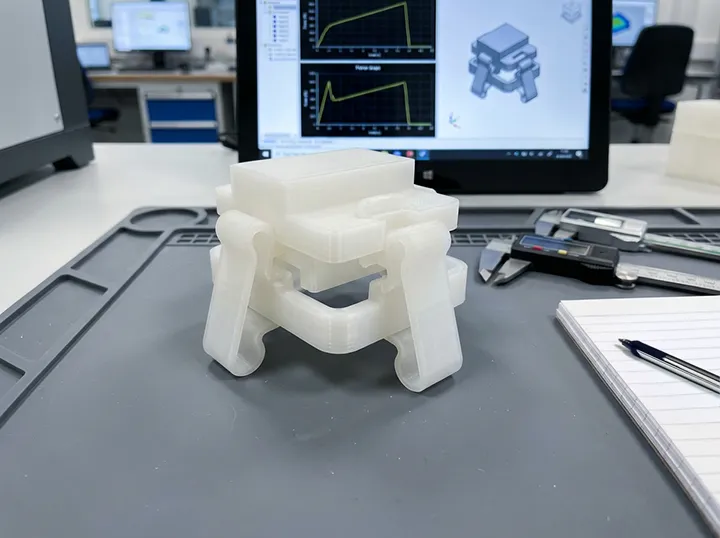
Functional Prototype Advantages
Risk Management: Identifies design errors (clashes, breakage, assembly issues) before mold production.
Field Testing: Allows the product to leave the lab and be tested in real-use conditions (heat, cold, vibration).
Certification: Some materials (e.g., UL94 Flammability) can be used in pre-certification tests.
Cost: Reduces testing costs by using composite plastics instead of machined metal.
Functional Prototype Limitations
Material Difference: Prototype materials mimic injection plastics by 90%-95%, they may not be an exact chemical match.
Surface Roughness: Visual (cosmetic) quality is secondary to durability (though it can be improved).
Anisotropy: 3D printed parts may be weaker in the vertical axis (Z-axis) compared to the horizontal axis depending on orientation.
Tolerance: Tolerances are slightly wider than mass-production steel molds (±0.1mm – ±0.3mm).
Production Table by Test Type
| Test Type | Recommended Tech & Material | Goal |
| Heat & Fluid Test | SLA (HTR Resin) or SLS (PA12) | Deformation and sealing at high temperatures. |
| Impact & Drop Test | FDM (ABS) or SLA (Tough Resin) | Toughness and fracture resistance. |
| Assembly (Fit) Test | SLA (Standard Resin) | Part-to-part fit and clearance checks. |
| Mechanism Test | SLS (PA12) | Lifecycle of gears, hinges, and moving parts. |
Materials Used
We use engineering materials such as Carbon Fiber Reinforced Nylon for heavy loads, TPU-E Flexible Filament for flexible gaskets, and HTR High Temperature Resin for extreme heat environments.
Industries Relying on Functional Prototyping

Automotive and Mobility
Verification of air intake ducts and brackets exposed to vibration, fuel, and engine heat during on-vehicle testing.
Explore IndustryConsumer Electronics
Testing the cycle life and drop resistance of snap-fit covers for handheld devices and remote controls.
Explore Industry
Industrial Machinery and Robotics
Testing the performance under load and ergonomics of robotic grippers and fixtures to be used on the production line.
Explore Industry
Medical and Healthcare Technologies
Validating the ergonomics of surgical tools and their resistance to sterilization processes using
Explore IndustryDesign & Testing Guide
How does the mechanical strength of 3D printed functional prototypes compare to injection molded parts?
Industrial prototypes produced with SLS (Selective Laser Sintering) using Nylon PA12 or Carbon Fiber reinforced filaments via FDM can achieve up to 90% of the mechanical strength of traditional injection molded parts. This makes them ideal for rigorous functional validation, impact testing, and end-use engineering applications.
Is it possible to perform liquid and air leak testing with 3D printed functional prototypes?
Absolutely. By utilizing clear resin SLA printing or applying specialized chemical sealing processes to SLS parts, we can manufacture components capable of liquid and air leak testing. These prototypes maintain airtightness and structural integrity under specific pressure levels required for fluid-handling validation.
Can 3D printed prototypes be used for durability testing of moving parts and living hinges?
Yes, high-performance materials such as Nylon-Like or PP-Like (Polypropylene-like) resins are specifically designed for fatigue resistance. These materials can withstand thousands of cycles in ‘Living Hinge’ tests and moving mechanism validations without structural failure or permanent deformation.
What are the thermal resistance limits for testing 3D printed functional prototypes?
While standard prototyping materials typically withstand 50-60°C, specialized engineering materials like HTR (High Temperature Resin) or high-performance thermoplastics can endure thermal tests up to 280°C. These materials are perfect for verifying heat deflection temperature (HDT) and performance in high-heat environments.
Is it suitable for outdoor testing?
Yes. With high UV-resistant ASA or PETG materials, long-term field testing under sunlight and rain is possible.
What is the lead time?
Since functional prototypes are usually produced with 3D printing technologies, they are shipped within 1-3 business days depending on part size.