


Aesthetic and Concept Prototyping
Our Aesthetic & Concept Prototyping service delivers high-fidelity, painted, and assembled models that perfectly mimic the final product for investor presentations and marketing.
Upload your CAD files and receive a custom quote within 2 hours.
Your uploads are confidential and secure.
What is a Visual Prototype?
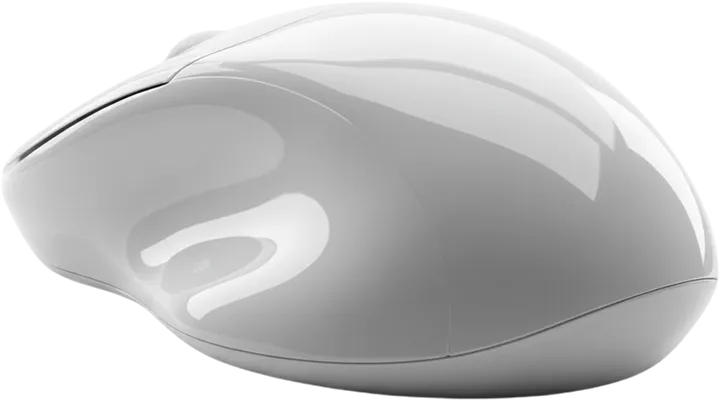
Visual Prototypes are high-aesthetic models produced to verify form, size, color, and surface texture rather than mechanical function. They are used as “Idea Models” early in the design process and as “Marketing Samples” in the final stages.
At ProtoDep, we combine the micron-level precision of Resin 3D Printing (SLA / DLP) technology with professional surface finishing (sanding, priming, painting). With models that look like they came out of an injection mold, possess glass-like transparency, or feature leather-like textures, your product becomes ready for exhibition before mass production begins.
Visual Prototype Advantages
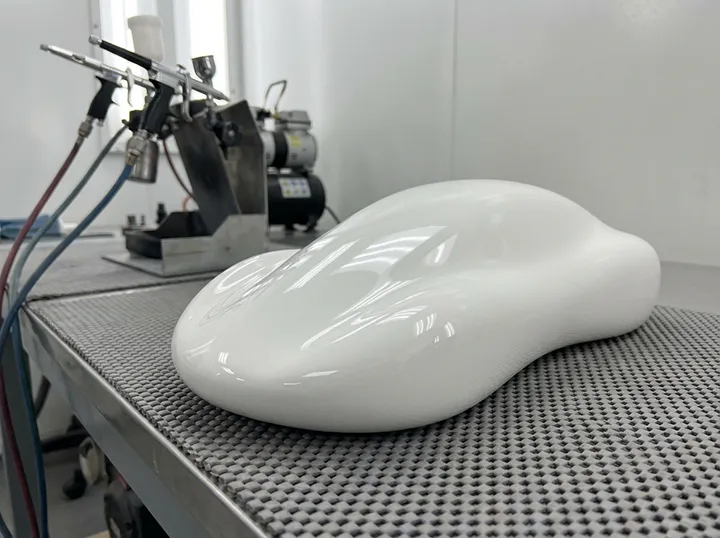
Aesthetic Perfection: Layer lines are completely eliminated to achieve glossy, matte, or textured finishes.
Communication Power: Much more effective than on-screen 3D renderings for convincing investors or customers.
Ergonomics Testing: Physically test how the product feels in hand, button placement, and size perception.
Rapid Revision: Allows you to spot design errors (visual disproportions) without incurring tooling costs.
Visual Prototype Limitation
Mechanical Strength: Aesthetic-focused materials (standard resins) are generally brittle and not suitable for heavy load testing.
Heat Resistance: Visual models can deform at temperatures above 50-60°C (unless special materials are chosen).
Labor Time: Achieving a flawless surface requires sanding and painting, adding 1-2 days to the lead time.
Cost: Slightly higher cost compared to raw printing due to the added manual labor (finishing).
Production & Finishing Process Table
| Process | Technology / Method | Result |
| Precision Printing | SLA / DLP (Standard Resin) | Smooth, high-detail raw part. |
| Surface Prep | Sanding & Priming | Elimination of all layer lines. |
| Coloring | Spray Painting (RAL/Pantone) | Desired corporate color and texture. |
| Transparency | Varnishing & Polishing | Glass-like clarity with Clear Resin. |
Critical Materials Used
We use Standard Prototyping Resin for the smoothest surfaces, Clear Transparent Resin for optical parts, and economical PLA Filament or CNC Modelling Block (Lightweight) for large volumetric mock-ups.
Industries Where Visual Prototypes are Critical
Consumer Electronics
Non-functional “Dummy” models with realistic screens and buttons prepared for pre-launch product photography of phones, headphones, or smart home devices.
Explore IndustryPackaging and Bottling
Cosmetic samples produced with transparent and colored resins to test the shelf appeal of perfume bottles, cream jars, or beverage containers.

Architecture and Construction
Scaled architectural models for housing projects or competitions, featuring landscaping details, painting, and lighting.
Explore Industry
Automotive and Mobility
Style models created to evaluate the aesthetic integration of a newly designed vehicle mirror, door handle, or front grille.
Explore IndustryDesign & Finishing Guide
How can I achieve a mass-production finish for my 3D printed prototype?
Through professional post-processing techniques such as sequential sanding, high-build priming, and industrial painting, we can transform raw 3D prints into high-fidelity cosmetic mock-ups. These visual prototypes look and feel like injection-molded, store-bought products, making them ideal for marketing and investor presentations.
What is the process for achieving high optical clarity in transparent resin models?
Raw transparent resin parts emerge from the 3D printer with a translucent, frosted appearance. To achieve near-glass optical clarity, we perform advanced post-processing steps including meticulous wet sanding and the application of a professional-grade, UV-resistant clear coat, reaching up to 90% transparency.
Can prototypes be custom painted according to specific RAL or Pantone color codes?
Yes, we offer professional industrial painting services for all prototypes. By providing a RAL or Pantone code, we can match your brand’s exact colors with various surface finishes, including matte, satin, high-gloss, or metallic, ensuring the model meets your design specifications.
Can you make soft-touch models?
Yes. We can simulate this feel using Flexible Elastic Resin or by applying special soft-touch paints over rigid parts.
Can you produce assembled visual models?
Absolutely. We print parts in different colors (e.g., black body, clear screen, grey button) separately, paint them, and then assemble them to achieve the final product look.
What are the structural differences between visual concept models and functional prototypes?
Visual concept models are optimized for aesthetic verification, form, and fit using standard resins, which tend to be more brittle. While perfect for color and design validation, they are not intended for mechanical stress testing. For load-bearing applications, we recommend engineering-grade materials like ABS-like or nylon-reinforced resins.
Learn More About Visual Prototyping
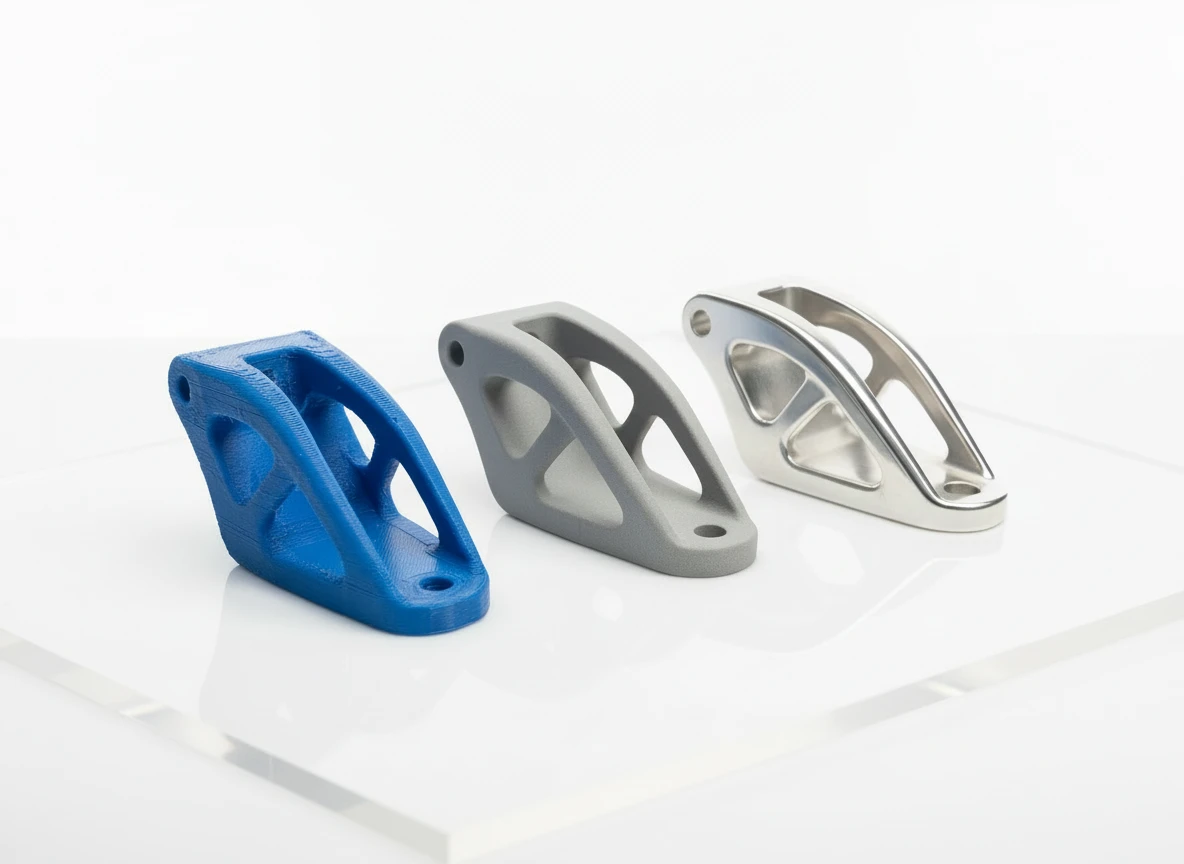
What Is Rapid Prototyping? Methods & Process
10 minutes
The most costly decision in product development is committing to production before a design has been properly validated. When tooling costs, lead times, and revision overhead are considered together, design flaws discovered
Read MoreQuote in Seconds, Parts in Days
Upload your 3D CAD files, select your manufacturing technology, and receive an instant cost analysis. Zero wait time, no minimum order requirements.