


Plastic
PLA Filament (Economic)
Rigid Visual Prototyping Plastic
The most popular easy-to-use bioplastic filament for rapid prototyping and high-detail visual models.
| Compatible Technologies | FDM Printing |
| Tensile Strength | 40 MPa |
| Heat Deflection Temperature (HDT) | 62.7°C |
| Hardness | 84 (Shore D) |
| Available Colors | Multi-color |
Upload your CAD files and receive a custom quote within 2 hours.
Your uploads are confidential and secure.
Why Choose PLA Filament (Economic)?
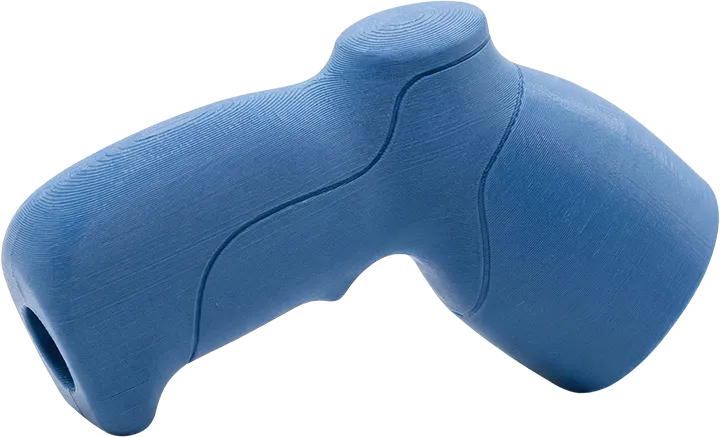
PLA Filament is an eco-friendly and economical thermoplastic derived from renewable resources like corn starch or sugarcane. As the most common material used in [Internal Link: FDM 3D Printing], PLA offers high dimensional accuracy due to its low warping rate. It is ideal for initial form checks, architectural massing models, and aesthetic prototypes. Being significantly more cost-effective than engineering plastics, it reduces the “trial-and-error” budget during design and provides designers freedom during the Concept Prototyping – Visual Models phase.
Advantages
Most Economic Option: It has the lowest printing cost compared to all other industrial filaments (ABS, PETG, Nylon).
High Detail & Accuracy: Does not warp during cooling, allowing for the printing of sharp corners and fine details.
Wide Color Range: Available in hundreds of options, including standard colors, metallic, wood-infused, and glow-in-the-dark.
Eco-Friendly: Its biodegradable nature contributes to sustainable manufacturing goals.
Limitations
Low Heat Resistance: Begins to soften at around 55-60°C; can deform in a hot car or in contact with hot water.
Brittleness: It is rigid/hard but tends to crack rather than flex under impact. Not suitable for snap-fit mechanisms.
Hard to Sand: Difficult to sand compared to ABS because it softens quickly with friction heat (wet sanding is recommended).
Mechanical Properties
Metric Measurements
Elastic Modulus
2.68 GPa
Elongation at Break
2.5 %
Density
1.2 g/cm³
PLA Filament FAQ
What is PLA Filament and why is it the cheapest option?
PLA Filament is a polymer derived from biological sources (starch). The abundance of raw material and ease of printing (no heated chamber required) make PLA Filament the most economical 3D printing solution on the market.
How heat resistant is PLA Filament?
PLA Filament has the lowest thermal resistance among 3D printing materials. It typically begins to soften around 60°C. Therefore, parts made with PLA Filament should not be used in direct sunlight or hot environments like engine bays.
Can functional parts be made with PLA Filament?
PLA Filament has a very hard and rigid structure, making it suitable for non-load-bearing enclosures or static figures. However, due to its low impact resistance, ABS Filament (Industrial) should be preferred over PLA Filament for moving or stressed mechanisms.
Is PLA Filament suitable for outdoor use?
No. Since PLA Filament is biodegradable, its structure degrades over time when exposed to moisture and UV light. For outdoor projects, we recommend using PETG Filament (Tough) or ASA instead of PLA Filament.
Is PLA Filament food safe?
While raw PLA Filament is a food-safe plastic, the 3D printing process introduces risks of residue from the nozzle and bacteria growth between layers. Therefore, direct food contact with PLA Filament parts is not recommended without a food-safe coating.
Can PLA Filament parts be painted?
Yes. The surface of PLA Filament parts can be painted with acrylic paints after applying a primer. However, care must be taken during sanding to prevent the PLA Filament surface from melting due to friction heat; wet sanding is advised.
Quote in Seconds, Parts in Days
Upload your 3D CAD files, select your manufacturing technology, and receive an instant cost analysis. Zero wait time, no minimum order requirements.