


Photopolymer
HTR High Temperature Resin
150°C+ Heat Resistant Resin
Heat-resistant resin capable of withstanding temperatures over 150°C under load, ideal for thermal flow testing.
| Compatible Technologies | SLA/DLP Printing |
| Tensile Strength | 70 MPa |
| Heat Deflection Temperature (HDT) | 230°C |
| Hardness | 85D |
| Available Colors | Amber |
Upload your CAD files and receive a custom quote within 2 hours.
Your uploads are confidential and secure.
Why Choose HTR High Temp Resin?
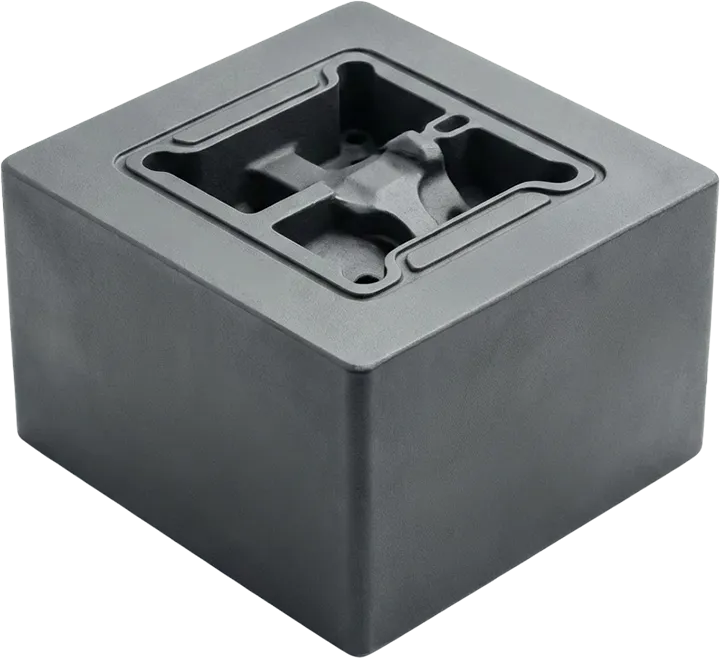
HTR High Temp Resin is an advanced SLA material developed to withstand high temperatures and pressures that standard resins cannot handle, maintaining its form even above 200°C. It combines the precision of Resin 3D Printing (SLA / DLP) with superior thermal stability. This material is a critical solution for under-hood automotive component testing, hot air/fluid flow analysis, and producing low-volume injection mold inserts. Its ceramic-like stiffness ensures it does not deform under load.
Advantages
High Heat Deflection (HDT): Depending on the post-curing process, it can achieve a Heat Deflection Temperature (HDT) between 238°C and 280°C.
Injection Mold Inserts: Due to its high hardness and heat resistance, it can serve as a mold core/insert for molding small batches of real plastic parts.
Smooth Surface: Provides glass-smooth surfaces that prevent turbulence in fluid dynamics testing.
Rigidity: Its high modulus structure prevents deformation under pressure and heat.
Limitations
Brittleness: It is a very hard material (like glass/ceramic) with low impact resistance; sensitive to drops and shocks.
Post-Cure Required: Must undergo UV and Thermal Curing (baking) after printing to achieve maximum heat resistance properties.
Color: Typically comes in translucent amber or yellow; intended for technical parts rather than aesthetic models.
Mechanical Properties
Metric Measurements
Elastic Modulus
3.1 GPa
Elongation at Break
4 %
Density
1.2 g/cm³
High Temp Resin FAQ
What is the temperature limit of HTR Resin?
The Heat Deflection Temperature (HDT @ 0.45 MPa) of HTR Resin ranges from 238°C to 289°C, depending on the post-curing method applied. For technical definitions, refer to Heat Deflection Temperature of Plastics – SpecialChem.
Can I use High Temp Resin to make injection molds?
Yes. HTR Resin is used in Rapid Tooling and Casting processes as “mold inserts” to produce 50-100 units of real plastic parts when aluminum tooling is out of budget or time constraints.
Is it suitable for hot fluid or air flow testing?
Absolutely. The material is resistant to both heat and moisture. It is reliably used for hot flow testing of manifolds, pipes, and nozzles in the Automotive and Mobility sector.
How is it different from standard resin?
Standard resins begin to soften at 50-60°C. HTR High Temp Resin withstands temperatures 4-5 times higher than that and exhibits ceramic-like hardness.
How is its impact resistance?
To maximize heat resistance, the molecular structure is made very rigid. Therefore, impact resistance is low, and the material is brittle. It is not suitable for snap-fit mechanisms requiring flex.
Can it be used as a soldering fixture?
Yes. It can be used as a wave soldering mask or carrier fixture in electronic PCB manufacturing, withstanding short-term exposure to soldering temperatures.
Quote in Seconds, Parts in Days
Upload your 3D CAD files, select your manufacturing technology, and receive an instant cost analysis. Zero wait time, no minimum order requirements.