


Plastic
High Density Tooling Board
Dense Modelling Block
High-density tooling board offering precision surface finishes and high wear resistance for molding and masters.
| Compatible Technologies | RIM Molding |
| Tensile Strength | 65 MPa |
| Heat Deflection Temperature (HDT) | 85°C |
| Hardness | 88 (Shore D) |
| Available Colors | Gray |
Upload your CAD files and receive a custom quote within 2 hours.
Your uploads are confidential and secure.
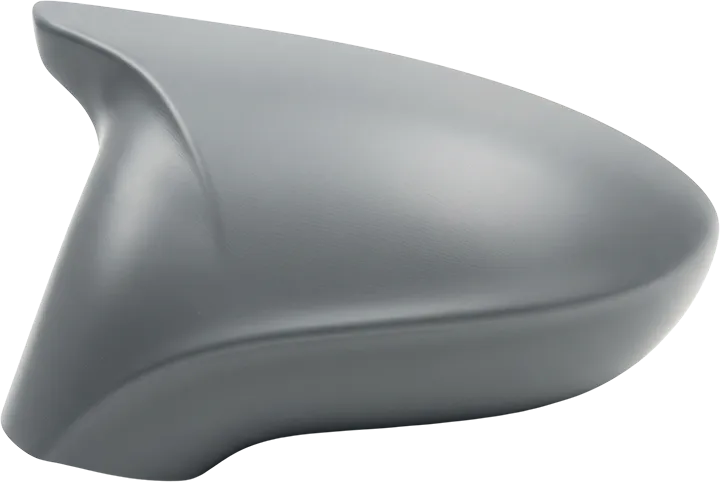
Why Choose High Density Tooling Board?
High Density Tooling Board is a polyurethane-based block material designed for CNC machining with micron-level precision. It is the industrial standard for creating flawless “Master Models” prior to Vacuum Casting processes. Unlike wood or MDF, it has no grain structure, is unaffected by moisture, and does not warp over time. Its non-porous, homogeneous structure allows for superior surface finishes with minimal sanding and priming, looking just like an injection-molded part.
Advantages
Superior Surface Finish: Its homogeneous structure delivers incredibly smooth surfaces after CNC machining, ready for polishing or painting.
Dimensional Stability: Resistant to temperature and humidity fluctuations; it holds tight tolerances perfectly.
Machinability: Machines significantly faster than aluminum or steel, reducing lead times for mold and pattern production.
Edge Definition: Maintains sharp edges and fine details without chipping or breaking.
Limitations
Structural Strength: Designed for modeling and tooling; not intended for use as a high-load bearing end-use part like metal.
Dust Generation: Creates fine dust during machining, requiring proper extraction systems.
Cost: Higher material cost compared to basic wood or MDF.
Mechanical Properties
Metric Measurements
Elastic Modulus
7.4 GPa
Elongation at Break
1.1 %
Density
1.7 g/cm³
High Density Tooling Board FAQ
What are the primary applications for High Density Tooling Board?
High Density Tooling Board is primarily used for creating master patterns for vacuum casting, checking fixtures (jigs), vacuum forming molds, and foundry patterns.
How is the surface quality of High Density Tooling Board?
High Density Tooling Board offers an excellent surface finish due to its non-porous nature. After CNC machining, the tooling board surface can be polished to a mirror-like finish with minimal sanding.
Why should I choose Tooling Board over wood or MDF?
Wood materials can warp due to moisture and have grain structures that affect finish. High Density Tooling Board is homogeneous, dimensionally stable, and does not warp, ensuring precise tolerances are maintained.
Can Tooling Board be used for vacuum forming molds?
Yes. Due to its heat resistance and compressive strength, High Density Tooling Board is excellent for producing molds for low-to-medium volume thermoforming (vacuum forming) runs.
Is High Density Tooling Board bondable?
Yes. Blocks of High Density Tooling Board can be bonded together using special adhesives to create large-scale models or molds that appear seamless.
How does machining Tooling Board compare to metal?
High Density Tooling Board is much softer and less abrasive than aluminum or steel. This allows it to be machined at very high feed rates on CNC machines, significantly reducing production time.
Quote in Seconds, Parts in Days
Upload your 3D CAD files, select your manufacturing technology, and receive an instant cost analysis. Zero wait time, no minimum order requirements.