


What is FDM 3D Printing? Technical Details, Advantages, and Application Areas
Comprehensive guide to FDM 3D printing technology: advantages, disadvantages, materials used, and application areas. From prototyping to production!

Introduction
As the world of additive manufacturing undergoes rapid transformation in recent years, FDM 3D printing technology has become one of the most widely preferred methods in both industrial production and among individual users. Known as Fused Deposition Modeling, this technology offers the ability to produce parts with complex geometries quickly and economically, addressing a wide range of applications from prototyping processes to end-use products.
In this article, we will conduct a comprehensive examination of FDM 3D printing, from its basic working principles to technical details, from materials used to application areas. Whether you are an engineer looking to accelerate your product development processes or an enthusiast just starting with this technology, you will discover in detail the opportunities and limitations offered by FDM technology.
What is FDM 3D Printing?
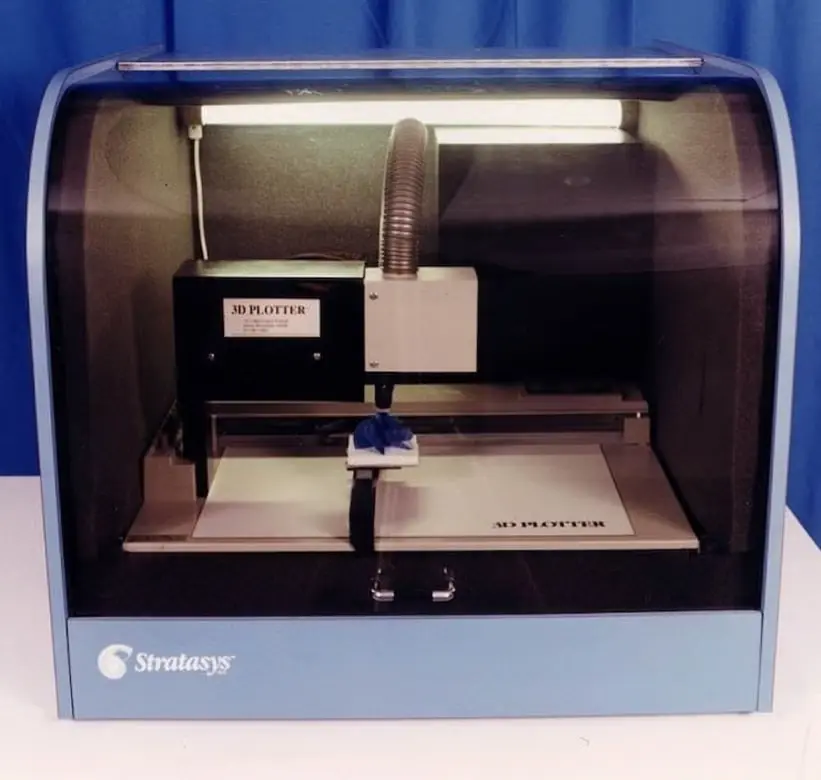
FDM (Fused Deposition Modeling) is an additive manufacturing technology based on the principle of heating thermoplastic filaments to a molten state and depositing them layer by layer. Developed by Scott Crump in the late 1980s, this method is one of the most widely used 3D printing technologies today.
The fundamental logic of the technology is quite straightforward: A plastic filament is fed into the printer’s extruder head, where it is heated to melting temperature and precisely placed onto the build platform through a nozzle. Each layer cools and solidifies, and the next layer is added on top. This process continues until the geometry specified in the digital design file is completely formed.
How Does FDM 3D Printing Work?
The FDM printing process consists of several fundamental stages:
3D Model Preparation
The process begins with converting a digital model created in CAD software or obtained through 3D scanning into STL or OBJ format.
Slicing Process
The 3D model is divided into hundreds or thousands of thin horizontal layers using slicing software. At this stage, parameters such as layer thickness, infill ratio, support structures, print speed, and temperature are determined. The slicer software generates a command file called G-code that the printer will follow.
Printing Process
The printer reads the G-code file and performs the following steps:
- Platform and nozzle heating: The build platform and nozzle are brought to temperatures suitable for the selected material
- Filament feeding: The rolled filament is pushed toward the nozzle by the extruder motor
- Molten extrusion: The molten plastic exiting the nozzle is precisely placed onto the platform
- Layer-by-layer construction: After each layer is completed, the platform descends (or the nozzle rises) and the next layer is added
- Cooling: Each layer solidifies sufficiently before the next layer is added
Post-Processing
After printing is completed, support structures are removed manually or in solvent baths. The part can undergo sanding, painting, or other surface treatments if necessary.
Materials Used in FDM 3D Printing
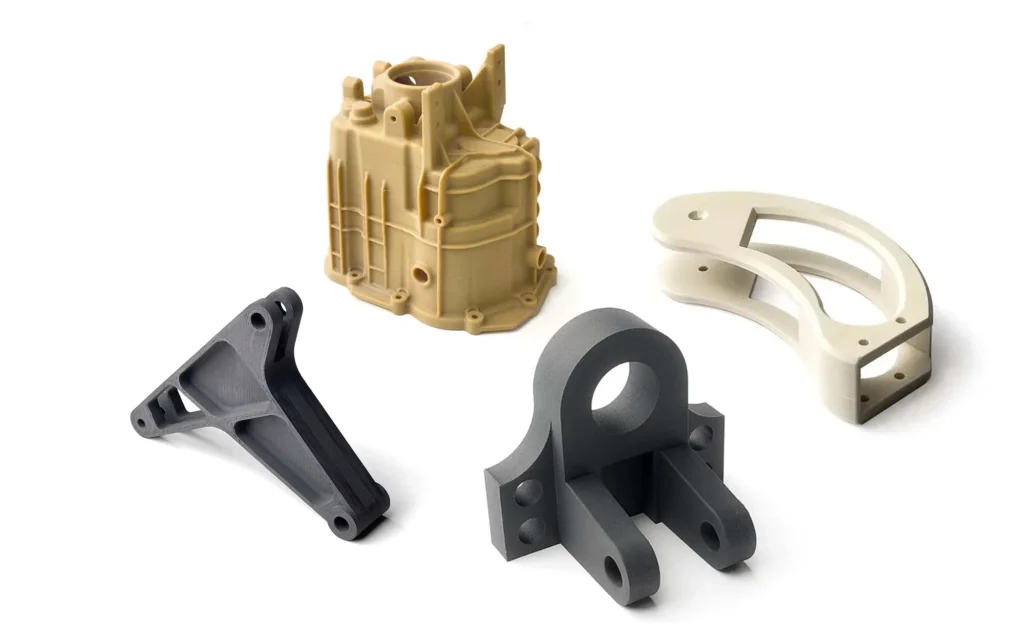
One of the biggest advantages of FDM technology is that it offers a wide range of material options. Each material offers different mechanical properties, thermal resistances, and application areas.
Basic Filament Types
PLA (Polylactic Acid) PLA is one of the most commonly used FDM filaments. With its biodegradable structure, low melting temperature, and easy processability, it is ideal especially for entry-level users.
ABS (Acrylonitrile Butadiene Styrene) Preferred in industrial applications, ABS is known for its high impact resistance and thermal resistance. It is widely used in automotive parts, electronic enclosures, and functional prototypes.
PETG (Polyethylene Terephthalate Glycol) Combining the easy processability of PLA with the durability of ABS, PETG has chemical resistance and toughness properties. It is preferred in applications that can contact food.
Engineering and Specialty Filaments
Nylon (Polyamide) Nylon filaments are used in applications requiring high strength, wear resistance, and low friction coefficient. They are suitable for gears, bearings, and functional mechanical parts.
TPU and Flexible Filaments Thermoplastic polyurethane (TPU) is used in applications requiring elastic and flexible properties. It is ideal for gaskets, insulation elements, and shock-absorbing parts.
Composite and Reinforced Filaments Filaments reinforced with carbon fiber, glass fiber, or metal powders provide much higher strength and hardness compared to standard plastics.
Filament Selection Table
| Material | Melting Temperature | Strength | Flexibility | Typical Applications |
|---|---|---|---|---|
| PLA | 180-220°C | Medium | Low | Prototypes, visual models, hobbyist projects |
| ABS | 220-260°C | High | Medium | Automotive parts, electronic enclosures |
| PETG | 220-250°C | High | Medium-High | Food containers, mechanical parts |
| TPU | 210-230°C | Medium | Very High | Gaskets, vibration dampers |
| Nylon | 240-270°C | Very High | Medium | Gears, bearings, structural parts |
| Carbon Fiber Nylon | 250-280°C | Very High | Low | Aerospace parts, high-performance applications |
Technical Details of FDM 3D Printing
The performance of FDM technology depends on many technical parameters. Proper adjustment of these parameters is critically important in terms of print quality and part characteristics.
Layer Height
Layer thickness is one of the most important parameters determining the resolution of an FDM print. It typically ranges from 0.1 mm to 0.4 mm:
- Thin layers (0.1-0.15 mm): Smoother surface, higher detail, but longer print time
- Standard layers (0.2 mm): The optimal point for quality and speed balance
- Thick layers (0.3-0.4 mm): Fast production, but visible layer lines
Nozzle Diameter
While the standard nozzle diameter is 0.4 mm, different diameters from 0.2 mm to 1.2 mm can be used. Nozzle diameter directly affects the level of detail, print speed, and strength.
Infill Rate and Pattern
The infill rate, which determines the internal structure of the part, can be set between 0% and 100%:
- 10-20%: Visual models, prototype shells
- 30-50%: General-purpose functional parts
- 80-100%: Structural parts requiring high strength
Infill pattern is also important: patterns such as grid, honeycomb, and triangular offer different strength/weight ratios.
Print Speed
Typical FDM printers operate at speeds of 40-100 mm/s. High speeds reduce production time but can cause vibration and precision losses. Slow speeds are preferred for detailed geometries.
Platform and Nozzle Temperatures
There is an optimal temperature range for each material. Platform temperature ensures adhesion of the print to the platform while preventing warping. Nozzle temperature affects flowability and layer adhesion.
Support Structures
Support structures are required for overhangs exceeding 45 degrees and suspended geometries. Options:
- Support from printer material (removed manually)
- Soluble support materials (such as PVA, HIPS)
Advantages of FDM 3D Printing
FDM technology offers several important advantages over other additive manufacturing methods:
Advantages of FDM 3D Printing
- Cost Effectiveness: FDM printers and materials are significantly more economical compared to other technologies such as SLA or SLS. Both equipment investment and material costs are low. This feature makes FDM attractive especially for small and medium-sized enterprises and entrepreneurs.
- Wide Range of Materials: The wide material selection ranging from PLA to carbon fiber-reinforced nylon offers suitable solutions for different application requirements. Each material provides different mechanical, thermal, and chemical properties.
- Ease of Use: FDM printers require less technical knowledge compared to other 3D printing technologies. Filament change is simple, maintenance requirements are minimal, and most desktop models can be safely used in home or office environments.
- Functional Prototyping: Parts produced with FDM have mechanical properties that can be tested under actual use conditions. This is critically important in the product development process.
- Large Part Production: FDM technology offers larger build volumes compared to many other 3D printing methods. Industrial FDM printers can produce parts exceeding one meter.
- Low Waste Rate: Since only the necessary material is used, much less waste is generated compared to traditional subtractive manufacturing. Unused filaments can be stored and reused.
- Rapid Iteration: Design changes can be made quickly and new versions can be produced within hours. This significantly accelerates the product development cycle.
Disadvantages of FDM 3D Printing
Like every technology, FDM has some limitations:
Disadvantages of FDM 3D Printing
- Surface Quality Limitations: Due to the layer-by-layer production method, FDM prints have visible layer lines. Surface quality is lower compared to resin-based technologies such as SLA or PolyJet. Post-processing such as sanding, vapor smoothing, or coating may be required for smooth surfaces.
- Anisotropic Strength: The strength of FDM parts is direction-dependent. Inter-layer bonding is weaker than intra-layer strength. This can cause the part to be more brittle in the Z-axis (vertical direction).
- Precision Constraints: Typical FDM printers work at tolerances of ±0.2-0.5 mm. This may not be sufficient in applications requiring very precise geometries or tight tolerances. ASME Y14.5 Geometric Dimensioning and Tolerancing standard
- Support Structure Requirement: Complex geometries require support structures, and their subsequent removal requires additional labor and time. Support marks may remain on the surface.
- Material Constraints: Although there is a wide range of materials, FDM only works with thermoplastics. Metal, ceramic, or very hard materials cannot be produced directly with FDM.
- Print Time: Print times can be quite long in applications requiring thick parts or high infill rates. Large parts can take days.
- Warping Risk: Especially with materials showing high thermal shrinkage such as ABS, the part may undergo deformation during cooling. This may require a heated platform and enclosed build volume.
Advantages-Disadvantages Comparison Table
| Feature | Advantages | Disadvantages |
|---|---|---|
| Cost | ✓ Low initial investment ✓ Economical materials | ✗ Unit cost may remain high in large-volume production |
| Speed | ✓ Rapid prototyping ✓ Easy iteration | ✗ Long print times for complex parts |
| Material | ✓ Wide selection range ✓ Functional properties | ✗ Only thermoplastics ✗ Anisotropic strength |
| Quality | ✓ Functional parts can be produced | ✗ Visible layer lines ✗ Limited surface quality |
| Usage | ✓ Easy learning curve ✓ Minimal maintenance | ✗ Support structures removed manually |
| Application | ✓ Use in various sectors | ✗ Not suitable for very tight tolerances |
Application Areas of FDM 3D Printing
FDM technology has a very wide range of applications. Here are the most common use areas:
Prototyping and Product Development
The most common use area of FDM is rapid prototyping. Designers and engineers can quickly convert their ideas into physical models to conduct form, fit, and function tests.
Automotive Sector
In the automotive industry, FDM is used to produce concept models, functional prototypes, fixtures, and molds. Additionally, custom vehicle modifications and classic vehicle spare parts can also be produced with FDM.
Aerospace
Lightweight structural parts, cabin interior elements, air ducts, and fixtures are being produced with FDM in the aerospace sector. Organizations such as NASA and SpaceX use FDM parts in spacecraft.
Medical and Healthcare
Anatomical models, surgical guides, custom orthotics and prosthetics, and dental applications are FDM’s uses in the medical field. Patient-specific implants and custom medical devices can also be produced.
Consumer Electronics
Enclosures for electronic devices, protective covers, holding fixtures, and custom accessories can be quickly produced with FDM. They are especially widely used in mechanical testing of prototype electronic devices.
Education and Research
Universities and research institutions use FDM technology in STEM education, scientific visualization, and experimental research. Students can examine theoretical concepts on physical models.
Architecture and Construction
Architectural models, concept presentations, and structural test models are produced with FDM. Additionally, custom building elements and decorative features can also be produced with this technology.
Low-Volume Production
In low volumes where traditional manufacturing methods are not economical, FDM can be used to produce end-use parts. It is especially advantageous in customized or personalized products.
Jigs, Fixtures, and Tooling
Custom holders, assembly jigs, and measurement fixtures used on production lines can be produced quickly and economically with FDM.
FDM 3D Printing Usage Rates by Sector
FDM (Fused Deposition Modeling) technology is most commonly used in industrial production with a rate of 35%. R&D (Research and Development) activities rank second at 25%, while the education sector has a usage rate of 20%. Hobbyist use stands at 12%, and medical applications account for 8%. This distribution demonstrates that FDM technology has a broad application potential in both professional manufacturing environments and individual usage areas.
Comparison of FDM and Other 3D Printing Technologies
To better understand FDM, it will be useful to compare it with other popular 3D printing technologies.
FDM vs SLA (Stereolithography)
SLA is based on the principle of curing liquid resin in layers with UV light.
| Feature | FDM | SLA |
|---|---|---|
| Material | Thermoplastic filaments | Photopolymer resins |
| Surface Quality | Medium (visible layer lines) | Very high (smooth) |
| Precision | ±0.2-0.5 mm | ±0.05-0.1 mm |
| Strength | High (especially in engineering plastics) | Medium (can be brittle) |
| Cost | Low | Medium-High |
| Maintenance | Minimal | Resin cleaning required |
| Application | Functional parts, prototypes | Detailed models, jewelry molds, dental |
| Build Volume | Large (1m+ possible) | Small-Medium (generally up to 30 cm) |
FDM vs SLS (Selective Laser Sintering)
SLS works by sintering powdered polymers with a laser beam.
| Feature | FDM | SLS |
|---|---|---|
| Material | Thermoplastic filaments | Nylon, PA12, TPU powders |
| Support Requirement | Required | Not required (powder acts as support) |
| Surface Quality | Medium | Good (slightly granular) |
| Mechanical Properties | Good (anisotropic) | Very good (isotropic) |
| Cost | Low | High |
| Production Volume | Single or low-volume | Suitable for mass production |
| Post-Processing | Support removal, sanding | Powder cleaning |
FDM vs MJF (Multi Jet Fusion)
MJF is a technology developed by HP that combines chemical agents and thermal fusion.
| Feature | FDM | MJF |
|---|---|---|
| Production Speed | Slow-Medium | Very fast |
| Detail Quality | Medium | High |
| Mechanical Properties | Anisotropic | Isotropic |
| Color Options | Very wide | Limited (black, gray, white) |
| Initial Cost | Very low | Very high |
| Ideal Use | Prototype, hobbyist, small business | Mass production, functional parts |
Who is FDM 3D Printing Suitable For?
FDM technology appeals to a very wide user base:
Hobbyists and Home Users
Thanks to low entry cost and ease of use, FDM printers are ideal for home users. It is an excellent starting point for those who want to step into the world of 3D printing. Toys, decorative objects, household items, and repair parts can be easily produced.
Entrepreneurs and Startups
FDM is a cost-effective solution for entrepreneurs who want to quickly test product ideas, produce prototypes, and prepare initial customer samples. It is ideal for creating proof of concept before receiving investment.
Engineers and Designers
FDM is indispensable for professionals who want to accelerate design iterations, perform form-fit-function tests, and conduct manufacturability analyses.
Small and Medium-Sized Enterprises
Businesses with custom fixture, tooling, and prototype needs can produce these parts with FDM without using external sources. They can optimize production processes and reduce costs.
Educational Institutions
Schools, universities, and institutions providing STEM education use FDM printers to teach students design, production, and problem-solving skills.
Manufacturing Companies
Even large production facilities benefit from FDM technology for rapid prototyping, fixture production, and low-volume custom part needs.
Conclusion and Overall Assessment
FDM 3D printing is one of the most accessible and versatile technologies in the world of additive manufacturing. With low cost, wide material selection, and ease of use, it offers an ideal solution for both individual users and industrial applications.
Although it has some limitations due to the layer-by-layer production principle, it is unrivaled especially in prototyping, functional testing, and low-volume production applications. The technology continues to develop; with faster printers, wider material range, and higher precision, FDM’s application areas are expanding every day.
Used in many sectors from industrial production to education, from healthcare to automotive, FDM technology is one of the most practical ways to transform digital designs into physical reality.
If you are considering investing in FDM 3D printing, it is important to first clearly define your needs. The size of the parts you want to produce, required mechanical properties, tolerance requirements, and your budget will be determining factors in choosing the right printer and material.
Remember that FDM is a tool, and like all tools, it gives the best results in the right application. Instead of choosing a technology that is not suitable for your needs, evaluating your project’s requirements with a professional team is always the smartest approach.
Frequently Asked Questions (FAQ)
How long does FDM 3D printing take?
Print time depends on the size, complexity, layer thickness, and infill ratio of the part. While a small part can be completed in 30 minutes, large and complex models can take 48 hours or longer. An average prototype is generally completed in 2-8 hours.
Are parts produced with FDM durable?
For FDM printing, 3D model files in STL or OBJ format are generally used. These files can be exported from CAD software or created with free modeling programs.
What file formats are required?
FDM baskı için genellikle STL veya OBJ formatında 3D model dosyaları kullanılır. Bu dosyalar CAD yazılımlarından export edilebilir veya ücretsiz modelleme programlarıyla oluşturulabilir.
Are FDM prints waterproof?
Standard FDM prints are not completely waterproof due to gaps between layers. However, waterproofing can be achieved by using 100% infill, performing post-processing (sanding, primer, epoxy coating), or using waterproof filaments.
What color options are available?
FDM filaments are available in a very wide range of colors. There are hundreds of options from standard colors to metallic, transparent, translucent, and special effect filaments. Additionally, post-print painting is also possible.
Can metal parts be produced with FDM?
Direct metal FDM is not possible. However, metal-filled filaments (containing copper, bronze, stainless steel powders) can be used. For real metal parts, metal 3D printing technologies such as SLM (Selective Laser Melting) are required.
How are support structures removed?
upport structures can be removed manually with pliers or cutting tools. If soluble support materials (PVA, HIPS) are used, the supports are dissolved by immersing the part in water or solvents such as limonene.
Can FDM prints contact food?
Some filaments such as PETG and PLA are FDA approved and suitable for food contact. However, there is a risk of bacterial accumulation in the gaps between layers of FDM prints. Special coating or treatments are recommended for food applications.