


[get_terms taxonomy="malzeme-turu"]
ESD Antistatic Resin
Antistatic Technical Resin
Static-dissipative technical resin with surface resistance designed to protect sensitive electronic components.
| Compatible Technologies | SLA/DLP Printing |
| Tensile Strength | - |
| Heat Deflection Temperature (HDT) | - |
| Hardness | - |
| Available Colors | Black |
Upload your CAD files and receive a custom quote within 2 hours.
Your uploads are confidential and secure.
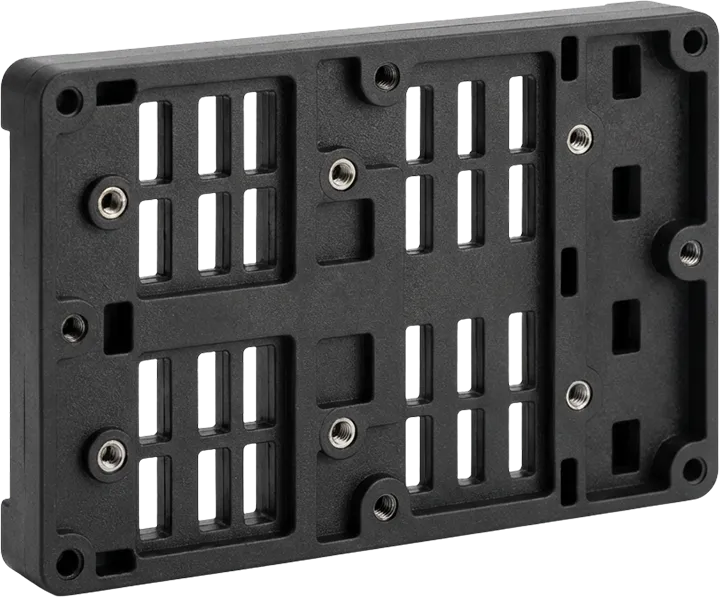
Why Choose ESD Antistatic Resin?
ESD Antistatic Resin is a specialized SLA/DLP printing material designed to prevent the buildup of static electricity, protecting sensitive electronic components from “silent killer” electrostatic discharges. In the Electronics and Technology sector, PCB assembly fixtures and handling trays are commonly manufactured from this material. Unlike conductive metals, it dissipates electricity safely and slowly, preventing sparks that could fry chips. It is the most effective prototyping solution to reduce scrap rates and increase safety on your production line.
Advantages
Static Discharge Protection: Surface resistance allows for controlled dissipation of static electricity, preventing sparks or sudden shocks.
High Modulus: A stiff and rigid material that supports the weight of PCBs and components during assembly without flexing.
Dust Repellent: Its antistatic nature prevents dust and particle attraction, making it suitable for cleanroom environments.
Rapid Integration: You can produce custom ESD jigs for your line within hours using Resin 3D Printing (SLA / DLP), without the need for expensive molds.
Limitations
Color Options: Due to carbon-based additives, it is typically available only in Black or Dark Grey.
Brittleness: More brittle than standard ABS-like resins; it tends to snap rather than flex under impact.
Heat Resistance: Generally around 50°C – 60°C; not suitable for fixtures going inside reflow ovens (High Temp Resin is required for that).
Mechanical Properties
Metric Measurements
Elastic Modulus
[acf_group group=”mekanik_ozellikler” field=”elastisite_modulu”] GPa
Elongation at Break
[acf_group group=”mekanik_ozellikler” field=”kopma_uzamasi”] %
Density
[acf_group group=”mekanik_ozellikler” field=”yogunluk”] g/cm³
ESD Resin FAQ
What does ESD Resin actually do?
Unlike insulative materials, ESD Resin does not accumulate electrical charge. It grounds the static electricity generated during electronic assembly, preventing damage to sensitive microchips.
What is the surface resistivity of this material?
The ESD Antistatic Resin we use typically has a surface resistivity in the range of 10⁵ to 10⁹ ohms/sq, adhering to industrial standards. This indicates the material is “static dissipative,” meaning it is neither fully conductive nor fully insulative.
Are parts made with ESD Resin conductive like metal?
No. ESD Resin does not conduct electricity directly like metal. If it did, it would cause short circuits when touching a PCB. This material simply discharges static load at a safe rate.
What applications is it recommended for?
We recommend using ESD Resin for SMT line carriers, grippers for Industrial Machinery and Robotics, and housings for sensitive sensors.
How is the mechanical strength of ESD Resin?
ESD Antistatic Resin is quite hard and rigid. It holds its shape under load but has low impact resistance. Care should be taken not to drop the parts.
Does the ESD property fade over time?
No. The antistatic property comes from the chemical formulation of the ESD Resin, not a surface coating. Therefore, the material retains its properties even if the surface is worn or machined.
Quote in Seconds, Parts in Days
Upload your 3D CAD files, select your manufacturing technology, and receive an instant cost analysis. Zero wait time, no minimum order requirements.