


3D Scanning and Reverse Engineering
With our 3D Scanning & Reverse Engineering service, we digitize physical objects with precision and convert parts without technical drawings into manufacturing-ready CAD models.
Upload your CAD files and receive a custom quote within 2 hours.
Your uploads are confidential and secure.
What is 3D Scanning & Reverse Engineering?
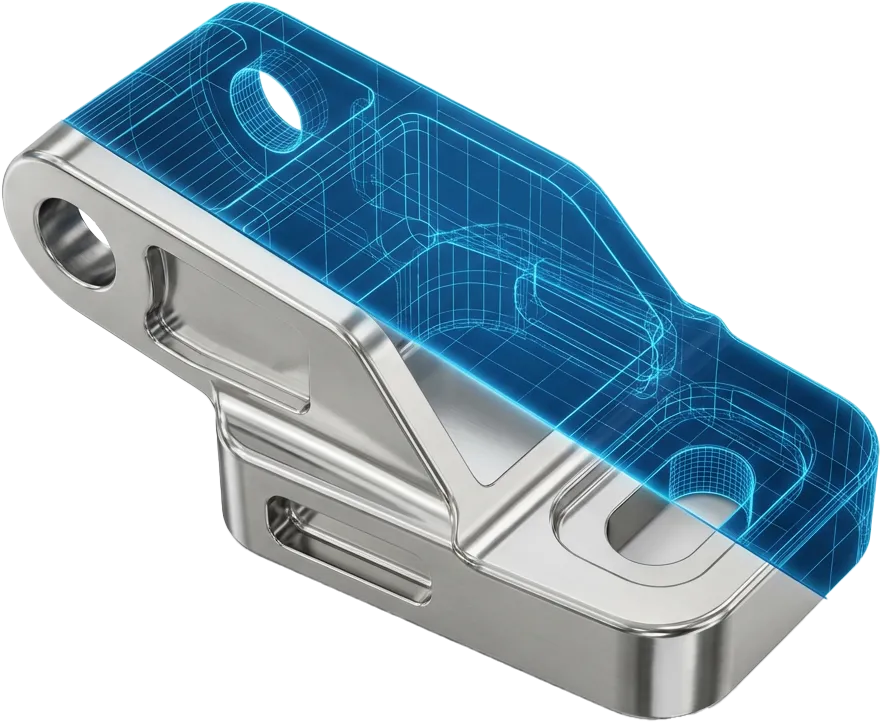
3D Scanning is the process of analyzing a physical object using laser or structured light technology to create a digital copy consisting of millions of points (Point Cloud). Reverse Engineering is the subsequent process of converting this raw scan data into manufacturing-ready parametric CAD models (STEP, IGES).
At ProtoDep, using our metrology-grade scanners, we provide solutions ranging from the repair of broken machine parts to competitive product analysis in the Automotive and Mobility sector. You can archive the obtained data or use it to re-manufacture parts via our FDM 3D Printing service.
3D Scanning Advantages
Legacy Part Recovery: Enables the exact replication of parts that are out of production or have lost technical drawings.
Precision Quality Control: Reports deviations between the manufactured part and the CAD data using detailed Color Maps.
Speed: Measuring complex organic shapes takes days with manual tools, whereas 3D scanning completes it in minutes.
Non-Contact Measurement: Can measure soft or deformable parts without touching or altering their shape.
3D Scanning Limitations
Line of Sight: The scanner only captures what it sees. Internal channels or hidden voids cannot be captured optically.
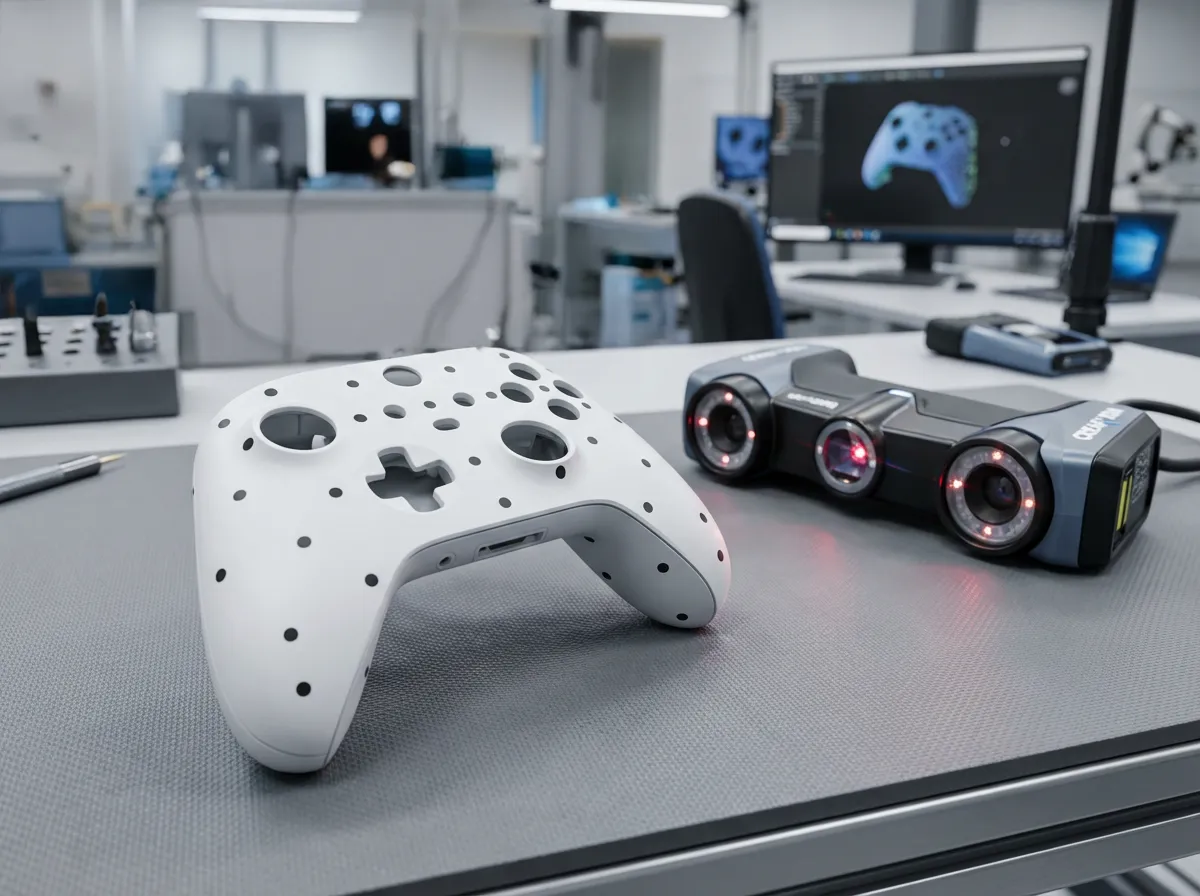
Surface Preparation: Highly reflective, black, or transparent surfaces require a temporary matte spray to be scanned.
Engineering Time: Scanning is fast, but converting the data into editable parametric CAD (Solidworks, etc.) requires engineering hours.
Deep Holes: The bottom of very deep and narrow holes where the laser cannot reach may not be fully captured.
Deliverables (Service Outputs)
We offer three different outputs based on your needs:
Mesh Data (STL/OBJ): For direct SLA / DLP Resin Printing or visualization.
Parametric CAD (STEP/IGES): Editable solid models for mold making and CNC machining.
Quality Control Report (PDF): Dimensional deviation analysis with color mapping.
Industries Using 3D Scanning

Industrial Machinery and Robotics
Scanning broken gears, worn pump impellers, or obsolete production line components to get your Industrial Machinery and Robotics back up and running.
Sektörü İncele
Automotive and Mobility
Scanning vehicle surfaces to design perfectly fitting accessories for bumpers or dashboards, followed by fit-checks using FDM 3D Printing.
Sektörü İncele
Medical and Healthcare Technologies
Scanning patient limbs to design personalized prosthetics, orthotics, or plaster molds.
Sektörü İncele
Architecture and Construction
Digitization of sculptures, historical artifacts, or handmade models to produce scaled replicas.
Sektörü İncele3D Scanning FAQ (Design Guide)
Which parts cannot be scanned?
Parts that move (non-static), change shape (liquids, fabrics), or have internal labyrinths unreachable by laser cannot be scanned optically. Internal structures require CT (Tomography) scanning.
Can black or shiny parts be processed using 3D scanning?
Yes, 3D scanning of black or shiny parts is possible. To prevent laser reflection and ensure accuracy, we apply a specialized, cleanable, micron-thin matte spray to the part, allowing the 3D scanning sensors to capture every detail perfectly.
Can 3D scan data be sent directly to CNC machining or manufacturing?
3D scan data (typically in STL format) cannot be sent directly to CNC. For manufacturing, our engineers must process the 3D scanning point cloud data through a reverse engineering phase to convert it into a parametric Solid Model (STEP or IGES).
What is the precision and accuracy of your industrial 3D scanning service?
Our industrial 3D scanning service utilizes metrology-grade scanners with an accuracy of 0.02 mm (20 microns). This high level of precision allows us to digitize even the most complex components with high fidelity for engineering and quality control
Do you provide on-site 3D scanning services for large machinery or vehicles?
Yes, we provide on-site 3D scanning services using mobile metrology equipment. We can digitize large machines, aircraft components, or vehicles at your facility, eliminating the need for transporting oversized parts for 3D scanning.
Can modifications be made to a part during the 3D scanning and reverse engineering process?
Yes, during the 3D scanning and reverse engineering process, we can fully modify the original design. We can correct defects in the physical sample, change mounting hole locations, or completely revise the form to optimize the part for production.
Quote in Seconds, Parts in Days
Upload your 3D CAD files, select your manufacturing technology, and receive an instant cost analysis. Zero wait time, no minimum order requirements.