


Industrial FDM 3D Printing
With our Industrial FDM 3D Printing service, we produce cost-effective large-scale prototypes, jigs, and fixtures using durable thermoplastics like ABS, PETG, and Carbon Fiber.
Upload your CAD files and receive a custom quote within 2 hours.
Your uploads are confidential and secure.
What is FDM 3D Printing?
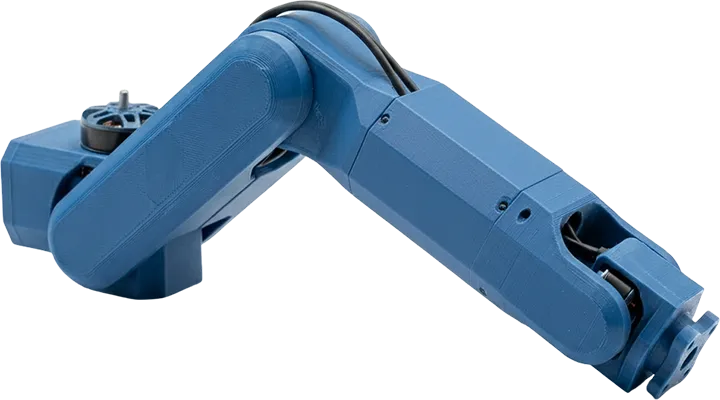
FDM (Fused Deposition Modeling) is the most widely used 3D printing technology, operating on the principle of melting and extruding thermoplastic filament layer by layer. At ProtoDep, we go beyond desktop printers, offering high dimensional accuracy and repeatability with our industrial-grade FDM printers.
This technology offers the widest range of materials, from visual models made with PLA Filament (Economic) to durable end-use parts produced with advanced composites like Carbon Fiber Reinforced Nylon. We can produce complex geometries waste-free and flawlessly thanks to soluble support structures.
FDM Printing Advantages
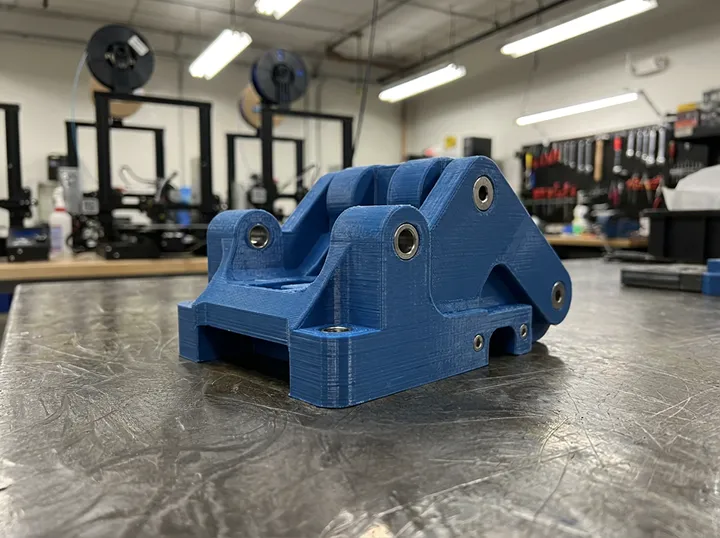
Wide Material Selection: Supports many thermoplastics like PLA, ABS, PETG, TPU, ASA, Nylon, and Carbon Fiber.
Cost-Effective: The lowest cost technology, especially for large-volume parts and early-stage prototypes.
Large Build Volume: Offers the ability to print parts up to 1 meter in a single piece or in sections.
Functionality: Since real production plastics are used, parts are suitable for mechanical, thermal, and chemical testing.
FDM Printing Limitations
Surface Roughness: Layer lines are more visible compared to SLA or MJF; requires sanding for a smooth finish.
Anisotropy: Parts are weaker in the Z-axis (layer bonding direction) compared to X and Y axes.
Tolerance Precision: May not yield results as sharp as SLA for very small and intricate details (e.g., holes under 0.5mm).
Support Marks: Support structures are mandatory for overhangs and may leave marks upon removal.
FDM Production Specifications
Metrik Ölçüler
Maximum Build Volume
380 x 284 x 380 mm
Standard Tolerance
±0.2 mm
Layer Thickness
80 mikron
Min. Wall Thickness
0.8 mm
FDM Material Options
ProtoDep’s FDM library offers dozens of material options tailored to your project needs, such as durable ABS Filament (Industrial), flexible TPU-E Flexible Filament, or chemically resistant PETG Filament (Tough).
Carbon Fiber Reinforced Nylon
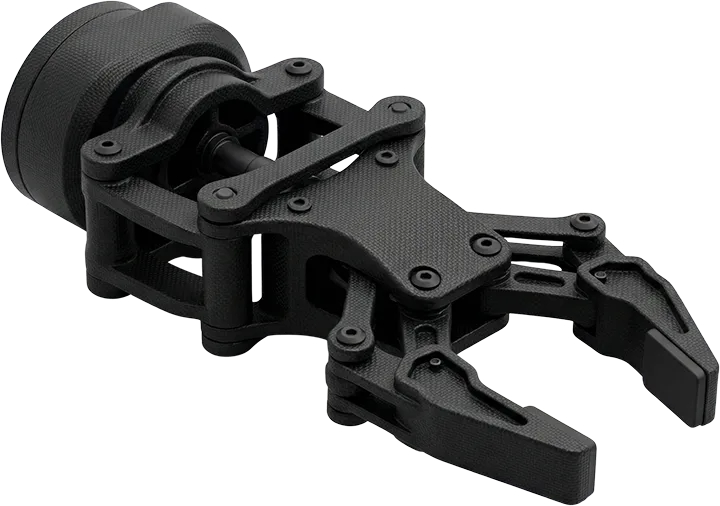
Carbon fiber reinforced composite offering ultra-high rigidity and strength for metal replacement components.
About Carbon Fiber Reinforced Nylon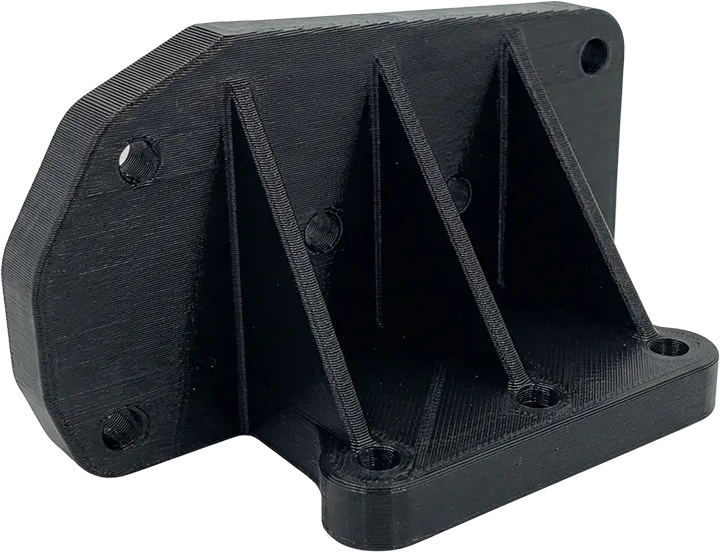
PETG Filament (Tough)
Tough engineering material combining PLA’s ease of use with ABS’s durability and high chemical resistance.
About PETG Filament (Tough)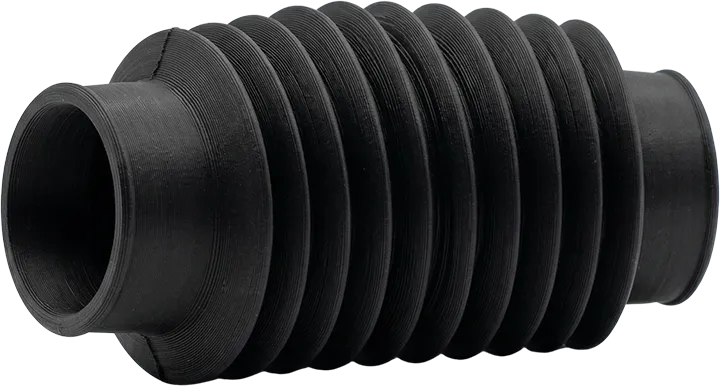
TPU-E Flexible Filament
High wear-resistant thermoplastic elastomer with excellent rebound, ideal for rubber-like functional parts.
About TPU-E Flexible Filament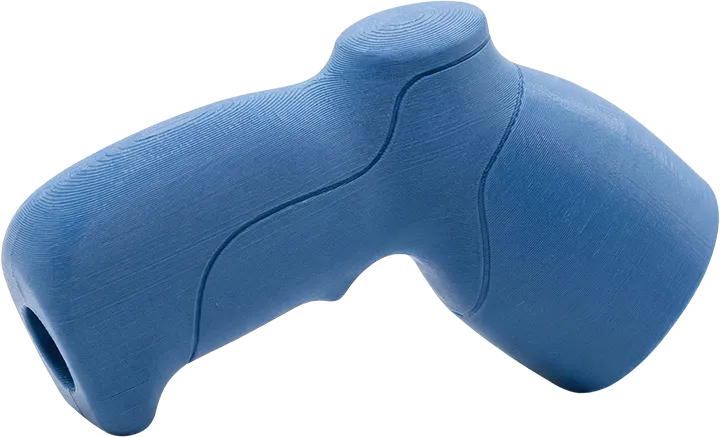
PLA Filament (Economic)
The most popular easy-to-use bioplastic filament for rapid prototyping and high-detail visual models.
About PLA Filament (Economic)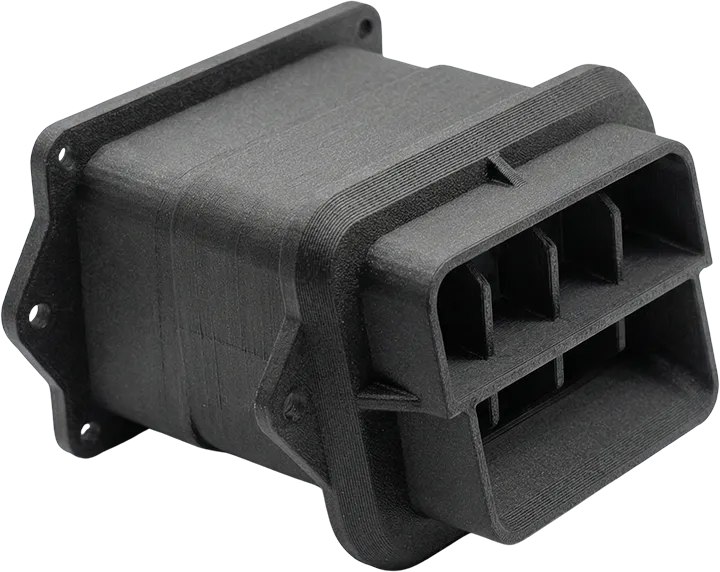
ABS Filament (Industrial)
Impact-resistant and machinable industrial plastic with moderate heat deflection properties.
About ABS Filament (Industrial)Industries Using FDM Printing

Automotive and Mobility
Production of under-hood ducts, assembly jigs & fixtures, and ergonomics testing parts using ABS and Carbon Fiber.
Explore Industry
Industrial Machinery and Robotics
Fast, on-site manufacturing of production line spare parts, robot grippers, and protective covers.
Explore Industry
Architecture and Construction
Printing large-scale architectural massing models, student projects, and educational aids using economical PLA material.
Explore Industry
Consumer Electronics
Electronic enclosures, remote control housings, and initial fit-check prototypes for Functional Prototyping.
Explore IndustryFDM 3D Printing Design Guide
What is the recommended minimum wall thickness for FDM 3D printing?
For structural integrity in FDM 3D printing, we recommend a minimum wall thickness of 1.2 mm. While it is possible to print features as thin as 0.8 mm, increasing the thickness ensures better mechanical durability and prevents part fragility, especially for functional prototypes.
How can I optimize 3D designs to minimize or avoid support structures?
To reduce 3D printing costs and improve surface finish, design your parts using the ’45-degree rule.’ Angles steeper than 45 degrees typically require supports. Additionally, orienting the part so its largest flat surface sits on the build plate will significantly minimize the need for support structures.
Can FDM 3D printed parts be made watertight and leak-proof?
Standard FDM prints are naturally porous. However, by using materials like PETG or ABS with 100% infill and increasing the number of outer shells (perimeters), you can achieve watertight results. For high-pressure applications, we recommend secondary post-processing like epoxy coating for a complete seal.
How are large-scale 3D models manufactured when they exceed the build volume?
For oversized models, we split the CAD files into smaller sections using interlocking features like dovetail or pinned joints. These components are printed individually and then professionally bonded using industrial-strength adhesives to create massive, seamless 3D models.
What are the ideal assembly and hole tolerances for FDM 3D printing?
Due to material shrinkage and filament expansion, holes in FDM parts often print slightly smaller than designed. We recommend incorporating a tolerance of 0.2 mm to 0.4 mm for mechanical fits, such as screw holes or shafts, to ensure smooth assembly without extra machining.
How can I improve the surface finish and eliminate layer lines on FDM prints?
Surface quality can be improved during the design phase by adding fillets to soften layer transitions. For a professional ‘end-use’ look, post-processing techniques such as sanding, chemical vapor smoothing, or high-build priming and painting can completely eliminate visible layer lines.
How do I choose the correct infill density for my 3D printed part?
“Infill density depends on the part’s application: 10-20% is ideal for visual prototypes; 30-50% is best for standard functional parts; and 80-100% is required for heavy-duty components or replacement parts subject to high mechanical stress.
Quote in Seconds, Parts in Days
Upload your 3D CAD files, select your manufacturing technology, and receive an instant cost analysis. Zero wait time, no minimum order requirements.