


Aerospace
Upload your CAD files and receive a custom quote within 2 hours.
Your uploads are confidential and secure.
Recommended Technologies for Aerospace
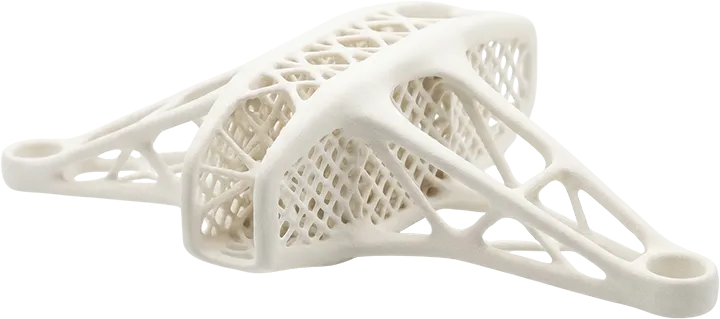
SLS 3D Printing
Support-free production of ultra-light, topology-optimized parts for UAV wings and complex air ducts.
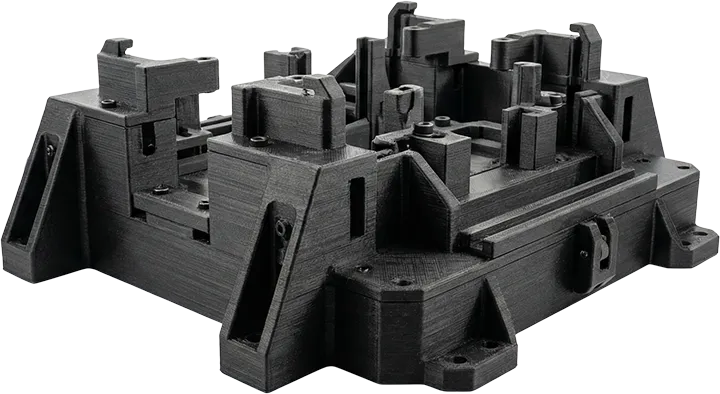
FDM (Carbon Fiber)
Manufacturing jigs, fixtures, and tooling aids with metal-like strength but significantly lighter weight.
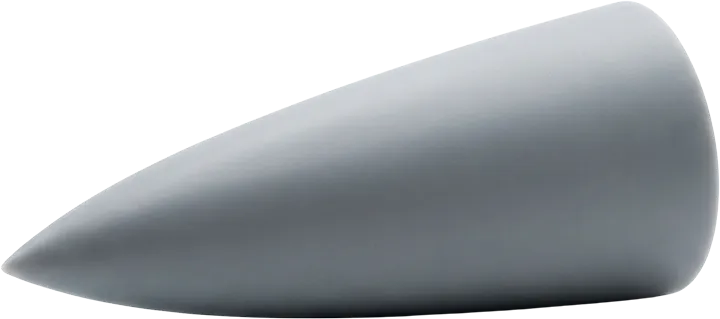
SLA Resin Printing
Micron-precision, smooth-surfaced aerodynamic models for wind tunnel testing and fluid dynamics.
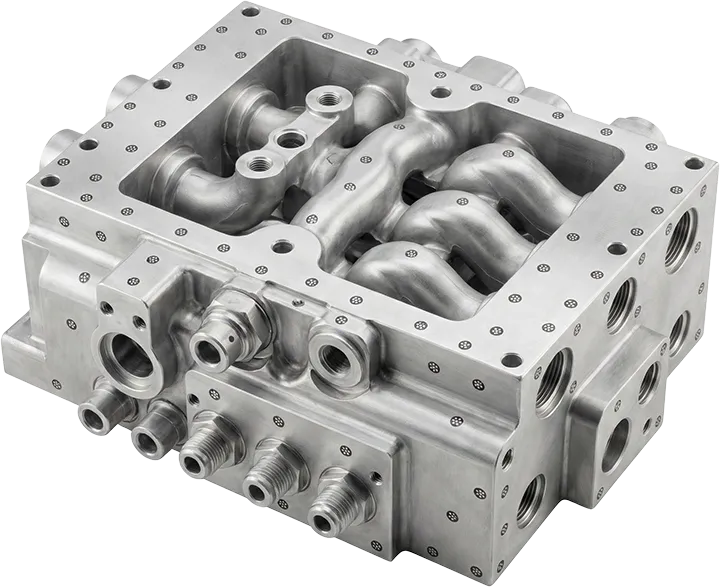
3D Scanning & Reverse Eng.
Digitization of legacy aircraft parts without technical drawings or damaged turbine blades.
Critical Materials Used in Aerospace
| Material | Technology | Properties | Applications |
|---|---|---|---|
| Carbon Fiber Reinforced Nylon | FDM Printing | Carbon fiber reinforced composite offering ultra-high rigidity and strength for metal replacement components. | Drone arms, structural brackets. |
| Flame Retardant Resin (UL94) | SLA/DLP Printing | High-performance resin meeting UL94-V0 flammability standards for high-safety aerospace and rail applications. | Cabin trim, seat components. |
| Nylon PA12 (Engineering) | SLS Printing | High-strength Polyamide 12 with a low friction coefficient and superior wear resistance for mechanical tools. | Fuel tanks, cooling channels. |
| HTR High Temperature Resin | SLA/DLP Printing | Heat-resistant resin capable of withstanding temperatures over 150°C under load, ideal for thermal flow testing. | Engine-vicinity test parts. |
| Clear Transparent Resin | SLA/DLP Printing | Polishable resin that achieves glass-like transparency, perfect for lenses and transparent housing prototypes. | Cockpit instrument covers, lenses. |
Applications of 3D Printing in Aerospace
Lightweighting
In aviation, fuel efficiency drives design. Parts with internal lattice structures, which are impossible to produce with traditional CNC, are manufactured using SLS 3D Printing Service. This reduces part weight by up to 60% while maintaining structural integrity.
Wind Tunnel Models
For aerodynamic testing of a new wing profile or fuselage, we produce scaled models with high dimensional accuracy and extremely smooth surfaces via our Visual and Concept Prototypes service.
Maintenance, Repair, and Overhaul (MRO)
Critical spare parts that are discontinued or have long lead times are produced on-demand using a digital inventory system. This minimizes AOG (Aircraft on Ground) time and reduces warehousing costs.
Interior Cabin Parts
Ergonomic components that enhance passenger comfort, air vents, and personalized trim parts are produced in low volumes using Flame Retardant Resin that complies with aviation flammability standards.
Aerospace Industry FAQ
Are the parts suitable for airworthiness testing?
Yes. Our Carbon Fiber and Nylon PA12 parts are produced with the density and durability required to pass mechanical and environmental tests.
Do you provide flame retardancy certification?
For interior applications, we use materials that meet UL94 V-0 (self-extinguishing) standards and provide the manufacturer’s Technical Data Sheets (TDS).
How do you produce large UAV parts?
Using our large-format industrial printers (e.g., up to 1 meter), we can print many parts in a single shot. Larger airframes are printed in sections and bonded using aerospace-grade epoxies to ensure structural integrity.
Can composites replace metal?
For non-critical structural parts (brackets, cable holders), using Carbon Fiber Reinforced Nylon offers significant weight savings compared to aluminum and is immune to corrosion.
Does surface roughness affect aerodynamics?
Raw 3D printed surfaces can be textured. However, for aerospace parts, we apply specialized sanding, priming, and painting processes to achieve a perfectly smooth surface, minimizing air drag.